The machine typically produces laser energy at a wavelength of approximately 10,600 nanometres. This wavelength is strongly absorbed by water, which is a major component of human tissue. When the energy is delivered to tissue, the absorbed energy produces controlled heating, vaporisation, ablation and coagulation depending on the machine, applicator and selected operating mode.
The word fractional means that the scanner does not treat the entire skin surface as one continuous area. Instead, it creates a pattern of microscopic treatment columns while leaving surrounding areas untreated. Those untreated areas support tissue recovery and remodelling — fractional delivery was developed to provide many of the benefits of ablative resurfacing while generally reducing recovery time compared with older fully ablative techniques.
CO2 fractional laser in simple words
A CO2 fractional laser machine:
- Generates the beamA CO2 laser source produces energy at 10,600 nm.
- Transfers itThe beam travels through an articulated arm or another optical delivery system.
- Scans itThe beam is directed into a fractional scanning handpiece.
- Divides the areaThe scanner splits the treatment area into microscopic laser spots.
- Creates columnsEach spot produces a controlled micro-column of ablation and thermal effect.
- Leaves gapsTissue between the columns is left relatively untreated.
- Triggers repairThe tissue begins a healing and remodelling response.
What does “ablative” mean?
An ablative laser removes or vaporises a controlled portion of tissue.
Because CO2 laser energy is absorbed by water, it can produce precise tissue ablation when correctly delivered. Heat around the ablated area can also create a zone of coagulation and thermal effect. The balance between ablation and surrounding thermal injury depends on the pulse characteristics and energy delivery of the system.
This is different from a non-ablative laser, which primarily heats tissue without intentionally removing the skin surface.
What makes the treatment fractional?
A fractional scanner delivers the laser in a grid, dot or patterned arrangement. Instead of removing the complete surface layer, it creates multiple microscopic treatment zones separated by untreated tissue. The pattern may be adjusted through parameters such as:
- Treatment area
- Shape
- Spot spacing
- Density
- Energy
- Pulse characteristics
- Number of passes
- Scanner pattern
What is a microscopic treatment zone?
A microscopic treatment zone is a small column of controlled laser injury created within the treatment area. Thousands of these columns may be placed in a fractional pattern, and the surrounding untreated tissue supports re-epithelialisation and healing while the treated columns initiate renewal and remodelling.
The depth and thermal effect of these columns depend on several factors, including:
- Delivered energy
- Pulse duration
- Beam quality
- Spot size
- Scanner speed
- Treatment density
- Tissue characteristics
- Number of passes
- Accuracy of the machine
A clinic should therefore not compare machines only by the maximum wattage displayed on the screen. What the wattage figure does and does not tell you.
What can a CO2 fractional laser be used for?
Depending on the exact device, intended use, accessories and regulatory documentation, fractional CO2 systems may be used by qualified practitioners for applications involving fractional skin resurfacing, selected acne scars, surgical and traumatic scars, skin texture irregularities, photoageing, fine lines and wrinkles, selected benign epidermal lesions, controlled tissue ablation, and vaporisation or coagulation of soft tissue.
Is a fractional laser the same as a surgical CO2 laser?
Not always. A complete CO2 platform may include different delivery attachments:
| Attachment | What it does |
|---|---|
| Fractional scanner | Creates a controlled pattern of microscopic treatment spots for fractional resurfacing |
| Surgical handpiece | Delivers a more focused or continuous beam for incision, ablation, vaporisation or coagulation of selected tissue |
| Gynaecological attachment | Available on some models for specific professional applications. The presence of an attachment does not prove the machine is documented or suitable for the claimed procedure |
| Additional scanners | Some systems include scanners for larger areas, precision work or different spot patterns |
Verify which modes and attachments are officially included with the exact machine, and which intended uses its documentation supports. The two modes compared.
This is not an ordinary cosmetic machine
A CO2 fractional laser is a high-energy laser device capable of ablating tissue. Medical treatment lasers can present immediate skin and eye hazards from direct or reflected exposure, so safety controls are essential.
A professional installation may require:
- Trained and qualified operators
- Controlled treatment-room access
- Wavelength-specific protective eyewear
- Warning signage
- Door or safety interlocks
- Emergency stop controls
- Smoke or plume evacuation
- Fire-safety precautions
- Proper electrical installation
- Written operating protocols
- Maintenance and calibration procedures
The exact requirements depend on applicable regulations, the device and the procedures performed. Safety features in detail.
Is fractional CO2 treatment risk-free?
No.
Expected short-term responses can include redness, swelling, discomfort, crusting and temporary changes in skin colour. Potential complications can include infection, prolonged redness, post-inflammatory hyperpigmentation, hypopigmentation and scarring. Risk varies with skin type, treatment intensity, operator experience and aftercare.
This is why a machine should never be sold with treatment presets and a one-hour demonstration. A clinic requires education covering patient assessment, skin-type evaluation, contraindications, consent, parameter selection, test-spot policy, infection control, eye and laser safety, pre-treatment preparation, post-treatment care, management of adverse reactions and referral procedures.
Why machine quality matters
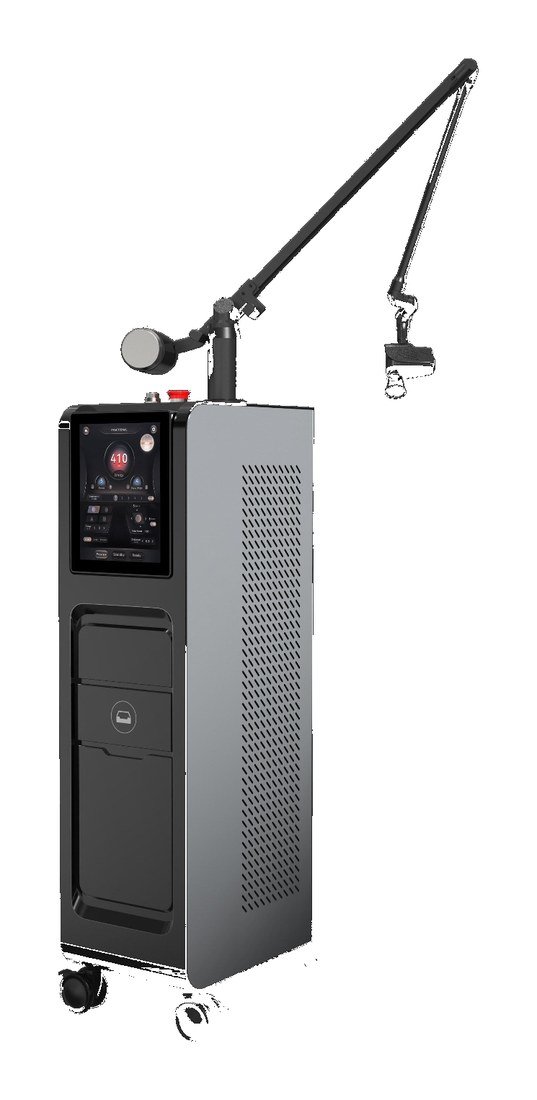
CO2 fractional treatment depends on the accurate interaction of several components: the laser source, power supply, pulse-control electronics, articulated arm, mirrors and optical joints, focusing lens, fractional scanner, scanner motors, software, safety interlocks, foot switch, and cooling and ventilation.
A fault or inconsistency in any one of them can affect beam delivery, spot uniformity or reliability. An attractive cabinet, a large touchscreen or a long treatment menu does not prove that the machine delivers accurate energy.
Frequently Asked Questions
What is a CO2 fractional laser in simple terms?
An ablative medical laser that delivers energy at about 10,600 nm in a pattern of microscopic columns, leaving untreated tissue between them. The wavelength is absorbed by water, producing controlled ablation and a surrounding thermal effect.
What does ablative mean?
It removes or vaporises a controlled portion of tissue, rather than only heating it as a non-ablative laser does.
Why is fractional delivery used?
Leaving untreated tissue between the microscopic columns supports recovery, which is why fractional delivery was developed as an alternative to older fully ablative resurfacing.
Can every CO2 machine perform every procedure?
No. Intended use, available attachments and permitted procedures depend on the exact model, its documentation and the qualification of the practitioner.
Is a CO2 fractional laser risk-free?
No. Expected responses include redness, swelling, discomfort and crusting; potential complications include infection, prolonged redness, pigment change and scarring. Risk varies with skin type, intensity, operator experience and aftercare.